General Webb
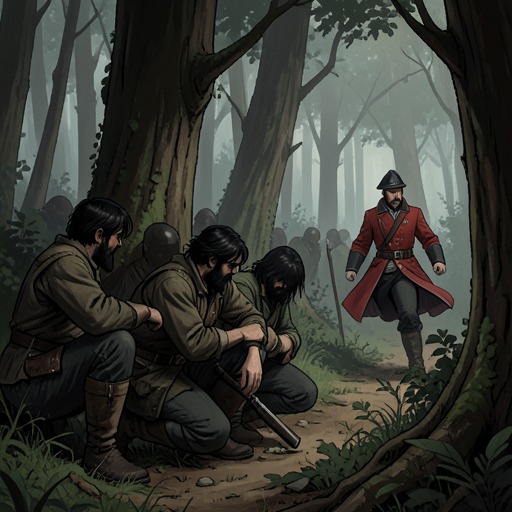
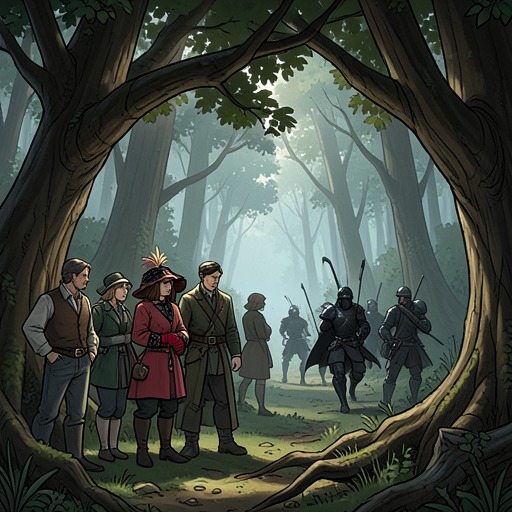
The Last of the MohicansGeneral Webb is the British commander in the northern provinces whose inaction leaves Fort William Henry isolated as Montcalm advances. Although Webb has more than five thousand men at Fort Edward and could concentrate a force substantially larger than the French army, he does not march to relieve the threatened fort; his eventual letter instead advises surrender and says that no troops can be sent. The contrast between his available strength and his refusal to act makes him a central figure in the novel’s account of command failure and abandonment.
Command and the threatened fort
When reports reach Fort Edward that Montcalm is moving up Lake Champlain with a large army, the post’s defenders learn that Colonel Munro urgently needs reinforcements at Fort William Henry. The two forts stand less than five leagues apart, linked by a road widened for wagons. Munro has only a regiment of regulars and a few provincial troops, while Webb commands more than five thousand men at Fort Edward. The narrator observes that by joining his detachments Webb could assemble nearly twice the number of Montcalm’s force.
Despite that numerical possibility, the officers and troops at Fort Edward appear more inclined to wait behind their works than to strike at the French as they advance. Webb orders a selected detachment of fifteen hundred men to depart for Fort William Henry, and the camp prepares for the movement. The evidence establishes that the detachment is set in motion, but it does not establish that Webb personally leads a relief force or that the deployment changes the fort’s fate.
The letter and the surrender
During Montcalm’s parley with Munro, Webb’s open letter is produced as proof that relief will not come. Munro reads it and loses the confidence he had placed in his superior: the letter advises a speedy surrender and states plainly that Webb cannot send even one man to rescue the garrison. Duncan Heyward verifies the signature and identifies it as the captured letter. Munro calls Webb’s action a betrayal that brings dishonor upon him.
The news changes the terms of the meeting. Montcalm says that retaining the fort is impossible and that it must be destroyed, but offers the defenders honorable treatment and a march from the place. When Heyward asks about the British colors, Montcalm says they may be carried to England; he also assures the party that the surrender and departure will be conducted honorably. Munro, shocked by the contrast between Webb’s refusal to support an ally and Montcalm’s stated generosity, sends Heyward to arrange the terms.
Consequences and narrative significance
Webb’s refusal to send further help deprives the defenders of hope that the fort can be held and helps bring about its surrender. The promised honorable departure does not protect the defeated garrison from the massacre that follows: Magua gives the signal, a large Huron force attacks the departing people, and the French troops remain inactive as the violence continues. The narrator explicitly condemns that inaction, placing the catastrophe in a wider crisis of military responsibility rather than treating the capitulation’s assurances as sufficient protection.
Webb’s part in the episode is defined less by a battlefield appearance than by the distance between command and consequence. His authority is substantial, his force is close enough to be considered for relief, and his letter turns that unrealized possibility into a direct notice of abandonment. The episode links imperial military decision-making to the exposure of soldiers and civilians on the frontier, while setting Webb’s failure against the restraint and negotiated conduct Montcalm claims to offer.